Piano Rebuilding Services in Pasco, WA
There is a point in a piano's life where repairs and regulation can no longer address the full scope of what the instrument needs. The strings have aged past the point of holding stable tune, the hammers are worn beyond voicing, the pinblock can no longer grip the tuning pins, and the action has deteriorated to a condition where individual part replacement is no longer practical. At that point, the instrument faces a choice: retirement or rebuilding. At Dickerson's Piano Service in Pasco, WA, we provide complete piano rebuilding for instruments that have the structural foundation and musical potential to justify a full restoration to like-new condition.
Contact Dickerson's Piano Service in Pasco, WA today to find out whether your piano is a strong candidate for rebuilding.
What Piano Rebuilding Actually Means
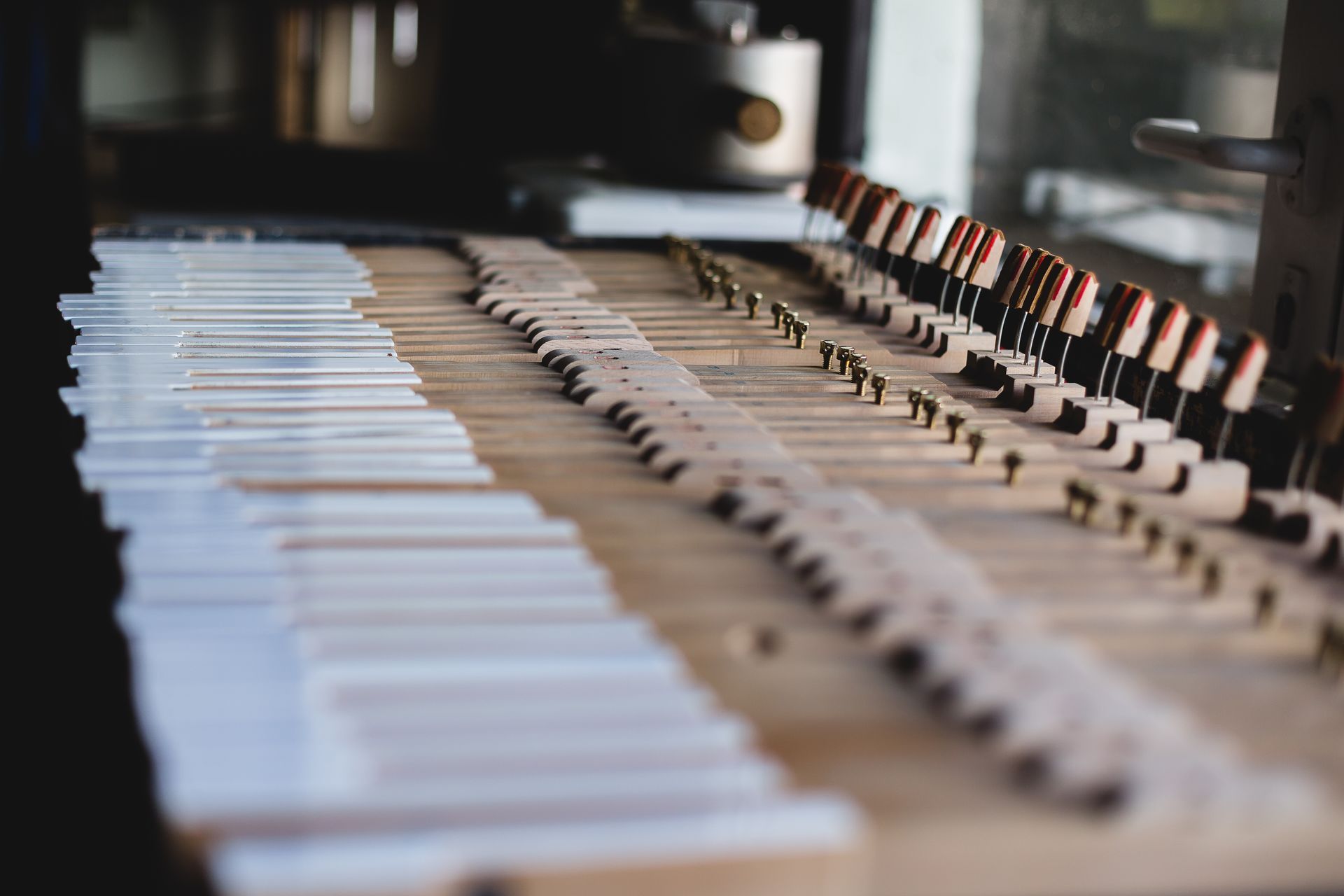
Piano rebuilding is not a single repair or an upgraded tuning — it is the comprehensive replacement and restoration of the piano's core mechanical, tonal, and structural systems. A fully rebuilt piano has had its strings, tuning pins, pinblock, action components, hammers, dampers, key coverings, and often its soundboard and bridges addressed or replaced entirely. The result is an instrument that performs at the standard it was designed to meet when it was originally manufactured — sometimes exceeding that standard when higher-quality replacement components are used.
The scope of any given rebuilding project varies based on the instrument's condition and the owner's goals. Some rebuilds are complete — every wearable component replaced from the ground up. Others are partial, targeting the systems most in need while leaving components that remain in serviceable condition. We assess each instrument individually and define the scope of work honestly before any commitment is made.
Call Dickerson's Piano Service in Pasco, WA to schedule a rebuilding assessment and get a clear picture of what your piano needs.
Core Components of a Piano Rebuild
A full piano rebuild addresses every major system of the instrument in sequence. Understanding what each component replacement involves helps clarify why rebuilding is a significant investment of time and materials — and why the result justifies that investment on the right instrument.
Pinblock Replacement
- The pinblock is the laminated hardwood plank into which the tuning pins are driven. It must grip the pins firmly enough that they hold their position under string tension while still allowing the technician to turn them during tuning. When the pinblock deteriorates — through age, humidity damage, or accumulated stress — the pins turn too freely and the piano cannot hold a tuning regardless of how carefully it is tuned. Pinblock replacement is one of the most technically demanding aspects of a piano rebuild.
Restringing
- Piano strings age and lose their tonal properties over decades. Bass strings accumulate internal corrosion that deadens their tone and reduces sustain. Plain steel treble strings develop surface corrosion and lose brightness and clarity. A full restring replaces every string in the instrument with new wire matched to the piano's original scale design specifications.
Action Rebuilding
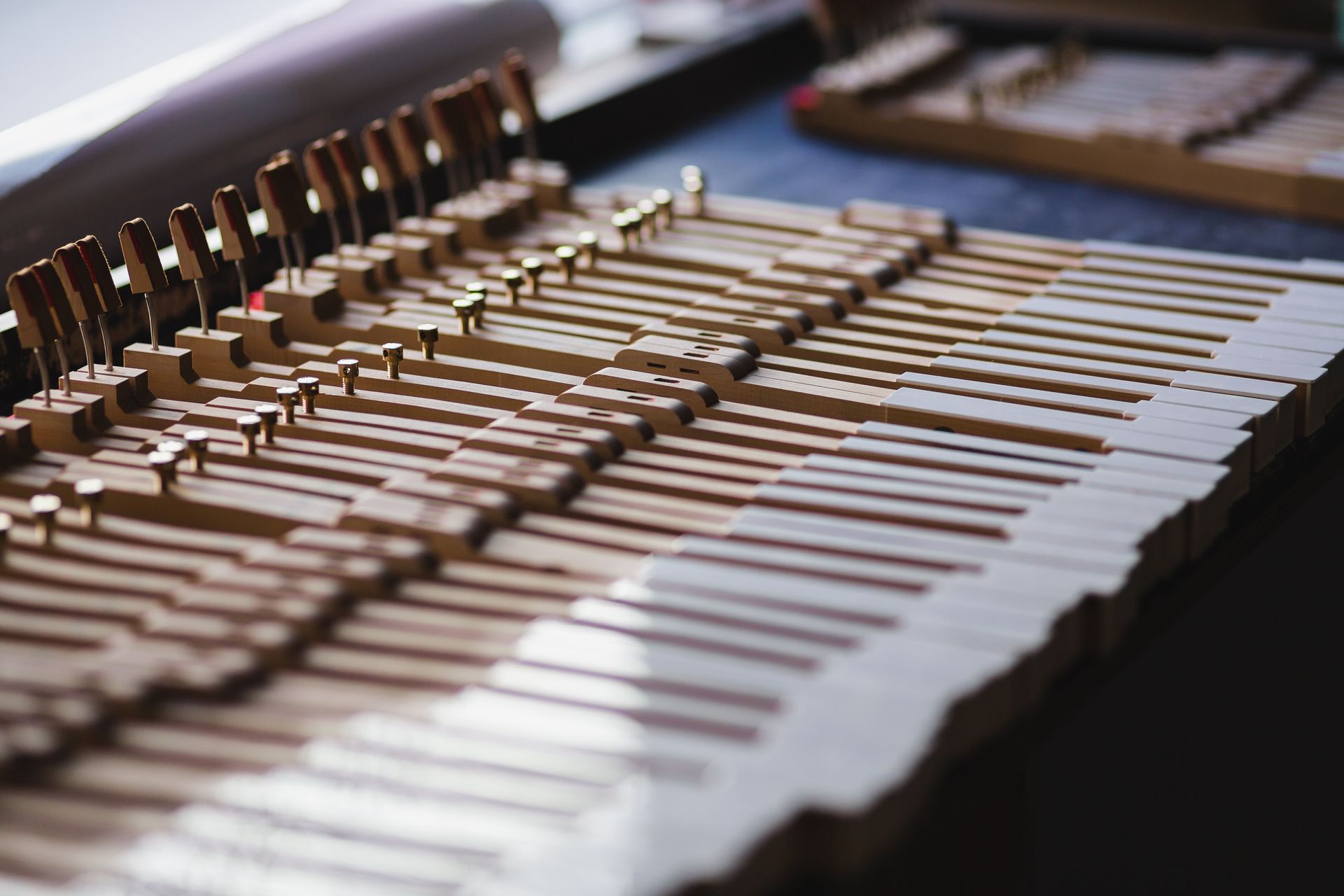
- The piano action is the mechanical system that translates key movement into hammer strike. A full action rebuild involves replacing the worn felts, leathers, and springs throughout the action mechanism — often including complete replacement of hammer assemblies, damper felts, wippens, and repetition levers on grand piano actions.
Hammer Replacement
- Hammers are among the most wear-prone components in the piano. New hammers, properly voiced for the instrument, produce a tonal character that grooved, compressed, or aged hammers cannot achieve regardless of how much needling is applied.
Damper System Replacement
- The damper system controls how long notes sustain after a key is released. Worn damper felts produce notes that sustain unevenly, fail to stop cleanly, or buzz against strings. Complete damper replacement restores consistent, quiet, reliable note cutoff across the full range of the instrument.
Key Recovering and Rebushing
- Key covering replacement restores the keyboard's appearance and tactile consistency. Key bushings — the felt-lined guide holes that keep keys traveling straight — also compress and wear with age, causing lateral key wobble that is corrected during rebushing.
Discuss the full scope of your piano's rebuilding needs with Dickerson's Piano Service in Pasco, WA — we provide detailed assessments and transparent project scoping.
Soundboard and Bridge Work in Piano Rebuilding
The soundboard is the large spruce panel across which the piano's strings exert downward pressure through the bridges. It is the primary amplifier of the piano's tone, and its condition has a direct bearing on the volume, sustain, and tonal richness the rebuilt instrument will produce.
Soundboard assessment is a critical part of every rebuilding evaluation. A soundboard with significant cracking, loss of crown, or separation from the inner rim may need repair or replacement to achieve the full tonal potential that a comprehensive rebuild warrants. Bridge work — including recapping or replacing bridge tops and reseating bridges that have lifted from the soundboard — is also addressed when necessary to ensure that string energy transfers correctly into the soundboard after restringing.
Contact Dickerson's Piano Service in Pasco, WA to discuss soundboard and bridge evaluation as part of your piano rebuilding project.
Which Pianos Are Worth Rebuilding
Piano rebuilding represents a significant investment, and not every instrument justifies that investment. The pianos that make the strongest candidates for rebuilding share certain characteristics: they were built by quality manufacturers using solid construction methods, they have structural integrity in their rims, plates, and case components, and they have a tonal and musical potential that rebuilt new strings, action, and hammers can fully realize.
Well-regarded American and European manufacturers from the late 19th through mid-20th centuries frequently fall into this category. A Steinway, Mason & Hamlin, Bosendorfer, Bechstein, or comparable instrument from that era, even in severely worn condition, often justifies a full rebuild because the quality of the original construction creates a ceiling for post-rebuild performance that mass-produced modern instruments cannot match.
If you have a piano you believe may be a strong rebuilding candidate, contact Dickerson's Piano Service in Pasco, WA for a professional evaluation.
Frequently Asked Questions About Piano Rebuilding in Pasco, WA
How is Piano Rebuilding Different From Piano Restoration?
The terms are often used interchangeably, but there is a meaningful distinction. Rebuilding refers specifically to the mechanical and structural renewal of the instrument. Restoration is a broader term that may also include cabinet refinishing, case repair, and cosmetic work. A complete restoration typically includes a full rebuild plus cabinet and cosmetic work, returning the piano to like-new condition in every respect.
How Long Does a Piano Rebuild Take?
A full piano rebuild typically takes several months from start to completion. The timeline depends on the scope of work, parts availability for the specific make and model, and the sequence in which systems must be addressed. We provide a realistic timeline estimate after completing the initial assessment and defining the project scope.
How Much Does Piano Rebuilding Cost?
Rebuilding costs vary significantly based on the instrument's size, the scope of work required, and the quality of replacement components selected. A partial rebuild addressing strings and action may cost substantially less than a complete rebuild that also includes soundboard work and cabinet refinishing. We provide detailed written estimates after the assessment.
Is It Cheaper to Buy a New Piano Than to Rebuild an Old One?
For mass-produced entry-level instruments, buying new is often more economical than rebuilding. For high-quality instruments from respected manufacturers, however, rebuilding frequently produces a piano that outperforms comparably priced new instruments because the original construction quality provides a foundation that modern mid-market production cannot replicate.
Will a Rebuilt Piano Perform as Well as a New One?
A properly rebuilt piano from a quality manufacturer will perform at or above the standard of a new piano in the same price range. In many cases, a rebuilt vintage instrument from a premier manufacturer outperforms new instruments at significantly higher price points because the quality of the original materials and construction is simply not available in new production at any reasonable cost.
Can Any Piano Be Rebuilt?
Not every piano is a viable rebuilding candidate. Instruments with severely damaged rims, cracked plates, or structurally compromised case components may not be rebuildable regardless of the investment applied. Low-quality instruments are also poor candidates because rebuilding cannot elevate an instrument beyond the ceiling set by its original construction quality.
Does a Rebuilt Piano Need to Be Refinished as Well?
Not necessarily. If the cabinet finish is in good condition, a rebuild can be completed without refinishing. Many owners choose to combine rebuilding and refinishing into a complete restoration so that the piano's appearance matches its renewed mechanical condition, but the two projects can also be done independently.
How Do I Know if My Piano is Worth Rebuilding?
The key factors are the quality of the original manufacturer, the structural integrity of the plate and rim, the condition of the soundboard, and the overall musical potential of the instrument. A professional assessment by an experienced piano technician is the only reliable way to answer this question for a specific piano.
What Warranty or Guarantee Comes With a Rebuilt Piano?
Warranty terms vary by the scope of work performed. We discuss warranty coverage for specific components and workmanship as part of the project agreement before rebuilding begins, so expectations are clearly established on both sides.
How Should a Rebuilt Piano Be Maintained After the Project is Complete?
A newly rebuilt piano should be tuned multiple times in the first year as new strings stretch and settle. Action regulation may also benefit from a follow-up check after the first several months of play as new parts compress and seat. Beyond that, the standard maintenance schedule applies — regular tuning, periodic regulation, and consistent humidity management.