Piano Tuning Services in Pasco, WA
A piano that is out of tune is not simply an aesthetic inconvenience — it affects how the instrument responds, how music is learned on it, and how it performs in any setting where it is played. At Dickerson's Piano Service in Pasco, WA, we provide professional piano tuning for acoustic uprights and grands of all makes, ages, and conditions. Whether your piano is tuned regularly or has not been serviced in years, we bring the experience and precision the instrument requires.
Schedule your piano tuning in Pasco, WA with Dickerson's Piano Service — contact us today to book your appointment.
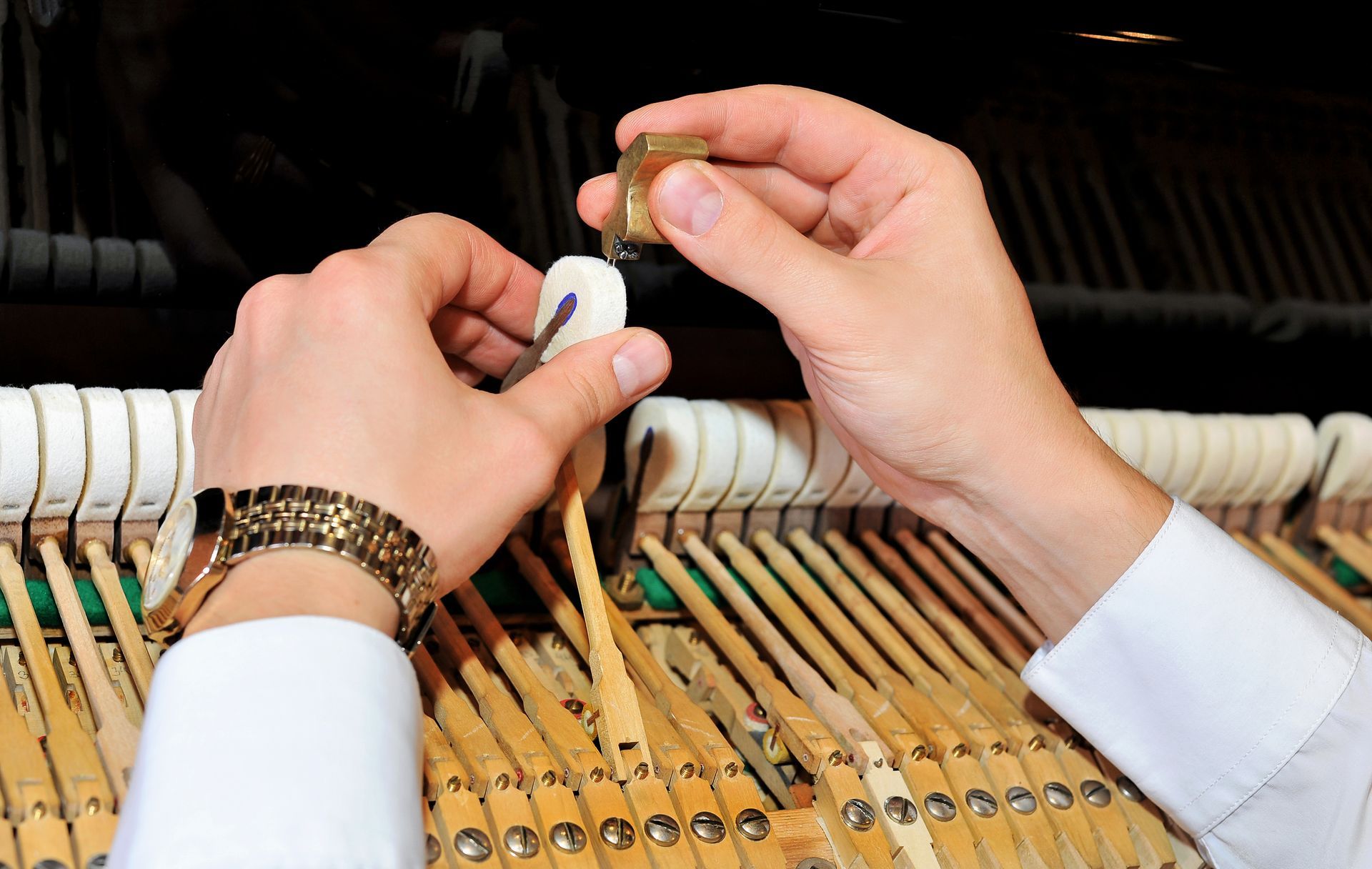
What Piano Tuning Is and Why It Matters
Piano tuning is the process of adjusting the tension of each of the piano's strings so that every note vibrates at its correct pitch relative to a standard — typically A440, which means the A above middle C vibrates at 440 cycles per second. A full-size piano has approximately 220 strings spanning 88 keys, with most notes in the mid and upper registers supported by two or three strings each. Every one of those strings must be adjusted individually and then balanced against the others to produce a piano that sounds harmonically correct across the full keyboard.
When a piano goes out of tune, it is not simply that individual notes sound wrong in isolation. The intervals between notes — the octaves, fifths, thirds, and unisons that form chords and harmonic progressions — become increasingly inaccurate. This affects the experience of playing the instrument in ways that go well beyond a single flat note.
Contact Dickerson's Piano Service in Pasco, WA today to bring your piano back to proper pitch and full musical clarity.
How Piano Tuning Works
Tuning a piano is a skilled technical process that requires both precision tools and trained ears. A professional piano technician works systematically through the instrument, beginning by setting the pitch of a reference octave in the mid-range of the keyboard and then tuning all remaining strings relative to that foundation. This process is called equal temperament tuning, which distributes the slight mathematical compromises inherent in Western music theory evenly across all keys so that the piano sounds correct in every key signature.
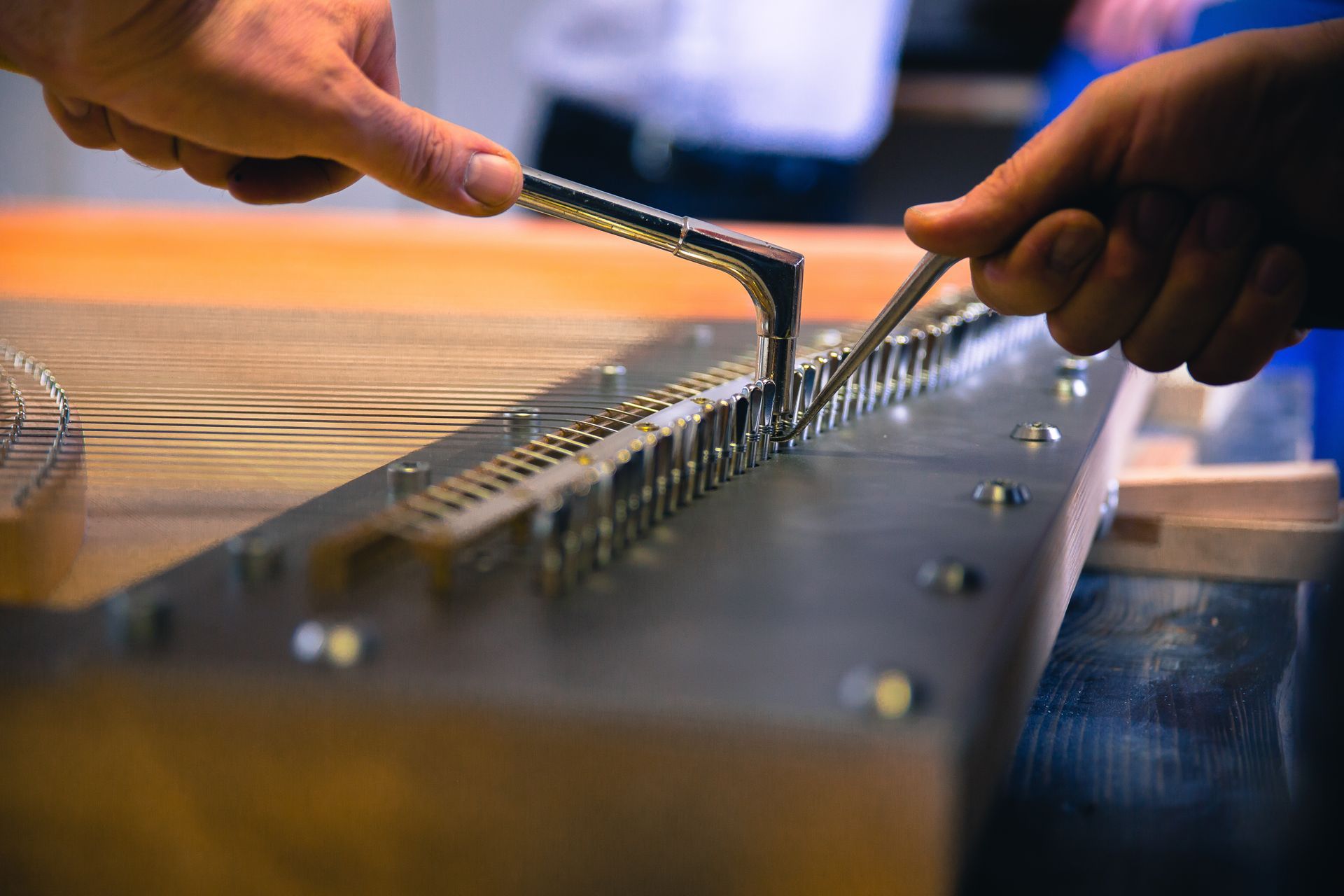
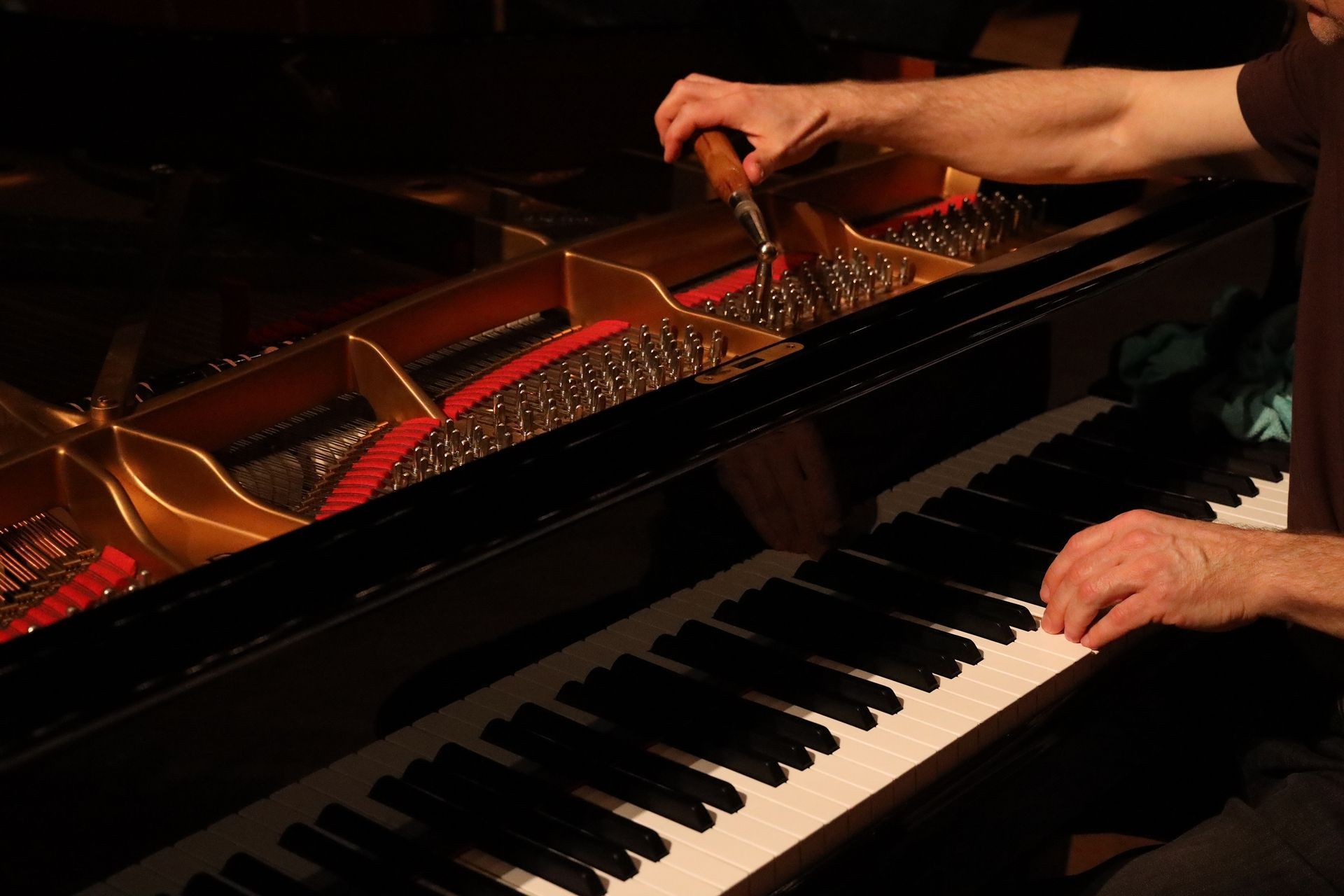
Throughout the tuning, each string is brought to its target tension using a calibrated tuning hammer. Beyond simply hitting a target frequency, the technician must set the tuning pin in a way that holds over time — a technique called setting the pin — so that the tuning remains stable after the appointment rather than slipping within days. This is a skill that separates a professional tuning from an imprecise one.
Book your professional piano tuning with Dickerson's Piano Service in Pasco, WA and hear the difference a proper tuning makes.
Pitch Raise vs. Standard Tuning
Not every piano tuning appointment is the same. When a piano has dropped significantly below standard pitch — typically because it has not been tuned in several years — a single standard tuning pass is not sufficient to bring it back to A440 and hold it there.
Why Pitch Raise Is Necessary
- When strings have been at low tension for an extended period, bringing them up to target pitch in a single pass places uneven stress across the soundboard and bridges. As each section of strings is raised, it causes the previously tuned strings to shift again. The result is an instrument that cannot be accurately tuned in one pass.
What a Pitch Raise Involves
- A pitch raise is an initial coarse tuning pass performed before the fine tuning. The technician raises the overall pitch of the instrument to approximately the correct level, then performs a full standard tuning once the string tensions have been equalized. Depending on how far the piano has dropped, this may require two or more passes before the instrument will hold an accurate fine tuning.
How to Avoid Needing a Pitch Raise
- Regular tuning — at minimum once per year, ideally twice — keeps the piano close enough to standard pitch that a pitch raise is rarely needed. Consistent humidity management also helps stabilize string tension between tuning appointments.
If your piano has not been tuned in over a year, contact Dickerson's Piano Service in Pasco, WA — we will assess whether a pitch raise is needed before performing the fine tuning.
How Often a Piano Should Be Tuned
The standard recommendation from piano technicians and manufacturers is to tune a piano at least twice per year. This interval accounts for the two major seasonal humidity cycles that most climates experience — dry winters and humid summers — both of which cause the wooden components of the piano, particularly the soundboard, to expand and contract, which directly affects string tension and pitch stability.
Factors That Affect Tuning Frequency
Several variables influence how often a specific piano may need tuning beyond the standard twice-yearly baseline.
New Pianos
- New pianos require more frequent tuning in their first few years because new strings stretch as they settle under tension. Many manufacturers recommend four tunings in the first year of ownership.
Heavily Played Instruments
- A piano used for several hours of daily practice will go out of tune faster than one played occasionally. Professional instruments and teaching studio pianos often benefit from quarterly tuning.
Instruments in Variable Environments
- Pianos placed near exterior walls, heating vents, air conditioning units, or in rooms with significant seasonal humidity swings will experience greater pitch instability and may need more frequent attention.
Pianos Returning From Storage or Moving
- Any piano that has been moved or stored should be tuned after it has acclimated to its new environment — typically after two to four weeks in the new location.
For tuning recommendations specific to your instrument and home environment in Pasco, WA, call Dickerson's Piano Service.
What Tuning Does Not Fix
A common misconception is that tuning will resolve all problems with a piano's sound or playability. Tuning addresses pitch only. It does not repair broken or sluggish action components, worn hammers, cracked soundboards, or any other mechanical issue. If your piano has notes that do not sound at all, keys that stick or feel uneven, or buzzing and rattling sounds during play, those are repair issues that exist independently of tuning.
In some cases, repairs must be completed before an accurate tuning can even be achieved. A piano with severely worn hammers, for example, may not sustain notes well enough for the tuner to accurately set pitch. We assess the full condition of the instrument at every appointment and communicate clearly when tuning alone is not the complete solution.
If your piano has both tuning and repair needs, Dickerson's Piano Service in Pasco, WA can address both — contact us to schedule a full service appointment.
Frequently Asked Questions About Piano Tuning in Pasco, WA
How Long Does a Piano Tuning Appointment Take?
A standard piano tuning typically takes between one and one and a half hours. If the piano requires a pitch raise before fine tuning, the appointment will take longer — often closer to two hours. We will give you a realistic time estimate when you book.
How Do I Know if My Piano is Out of Tune?
The most obvious sign is that the piano sounds unpleasant or off when you play it, particularly when playing chords or intervals. If you play alongside a recording, another instrument, or a digital reference, pitch discrepancies become even more apparent. If your piano has not been tuned in over a year, it is almost certainly out of tune regardless of how it sounds to an untrained ear.
Does It Hurt a Piano to Go a Long Time Without Tuning?
Extended periods without tuning allow string tension to drop progressively. When a piano drops far below standard pitch and then must be raised significantly in a single session, the dramatic change in tension across the soundboard and bridges creates stress on the instrument's structure. Regular tuning prevents this and is better for the piano's long-term health.
Can I Tune My Piano Myself?
Piano tuning requires a calibrated tuning hammer, a trained ear, and years of practice to perform accurately. Attempting to tune a piano without proper training and tools risks damaging tuning pins, strings, and the tuning pin block, and rarely produces results that hold. Professional tuning is strongly recommended.
Why Does My Piano Go Out of Tune Even When I Don't Play It?
The primary driver of pitch change is not playing — it is humidity. The piano's soundboard absorbs and releases moisture as ambient humidity rises and falls through the seasons. This causes the soundboard to crown and flatten, which directly changes the tension on the strings attached to it. A piano will drift out of tune from humidity fluctuation alone, even if it is never played.
What is A440 and Why Does It Matter?
A440 is the international standard pitch reference, meaning the A above middle C vibrates at 440 Hz. Tuning to this standard ensures your piano is in agreement with other instruments, recordings, and digital references. Some older pianos or instruments used for early music may be intentionally tuned to a different standard, but A440 is the default for virtually all contemporary acoustic piano tuning.
Will Tuning Make My Piano Sound Like New?
Tuning restores correct pitch relationships between notes, which significantly improves the musical quality of the instrument. However, the overall tone quality is also affected by hammer condition, soundboard health, and string age. If hammers are heavily grooved or strings are old and corroded, the piano may still sound dull or thin even after a precise tuning. In those cases, additional service such as voicing or string replacement may be worth considering.
How Should I Prepare for a Piano Tuning Appointment?
Make sure the piano is accessible on all sides and that the room is reasonably quiet during the appointment. Room noise — from televisions, appliances, HVAC systems, or other activity — can interfere with the tuning process. The room should also be at the temperature and humidity level it is typically maintained at, since tuning performed in an unusually hot, cold, dry, or humid environment may not hold as well once conditions normalize.
Does Moving a Piano Mean It Needs to Be Retuned Immediately?
A piano should be allowed to acclimate to its new environment before tuning — typically two to four weeks. Moving itself does not significantly affect tuning, but the change in humidity and temperature between the old and new location will cause the piano to shift in pitch as it adjusts. Tuning immediately after a move, before the instrument has stabilized, often results in a tuning that does not hold.
What is the Difference Between Tuning and Voicing?
Tuning adjusts the pitch of the strings. Voicing adjusts the tonal quality of the hammers — how bright, mellow, harsh, or warm the piano sounds. Voicing is performed by needling or reshaping the hammer felt to change how it contacts the string. A piano can be perfectly in tune but still sound unpleasant if the hammers are not voiced appropriately. These are two separate services that address different aspects of the instrument's performance.